
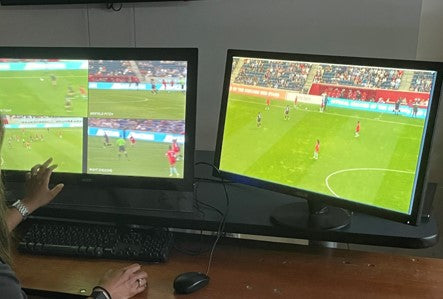
Technology is playing a larger role in sports officiating. Modern referees now rely on a variety of tools to manage games, review plays, and coordinate decisions.
Here are five technologies changing the way sports are officiated.
1. Referee Communication Systems
Wireless referee communication headsets allow officials to stay connected during games. These systems help referees coordinate calls, discuss penalties, and manage the flow of play.
Communication systems are widely used in sports like football, soccer, rugby, and basketball.

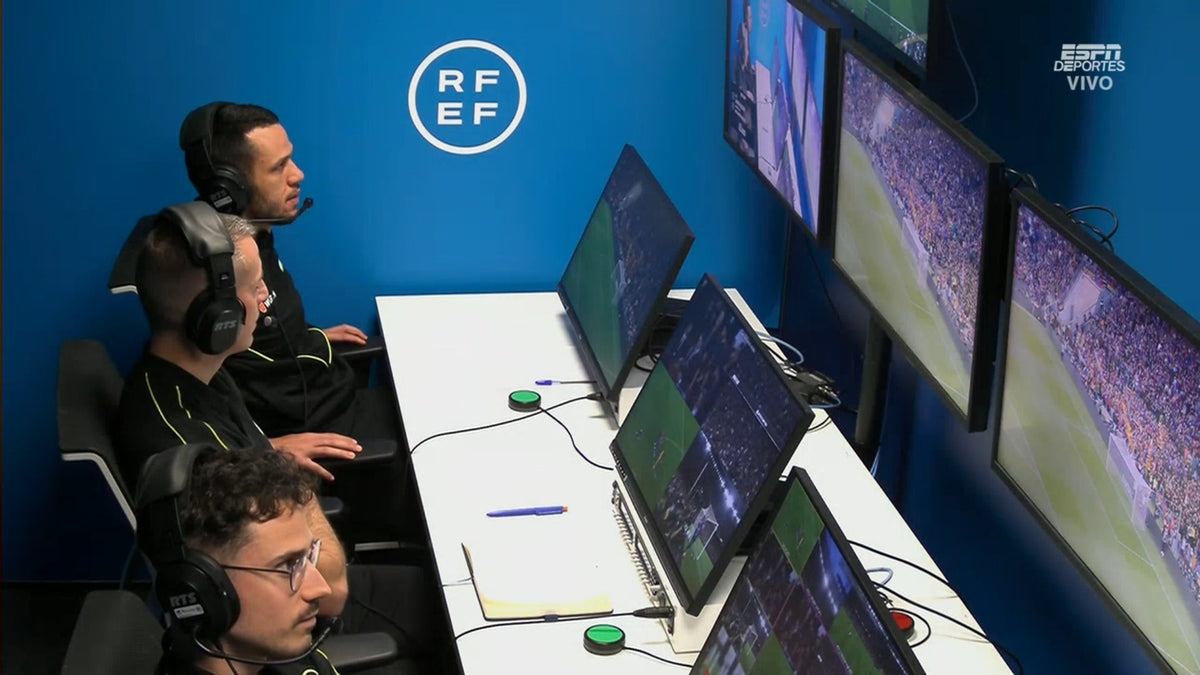
2. Video Replay Systems
Instant replay technology allows officials to review critical moments using video footage. Replay systems help confirm scoring plays, fouls, and boundary decisions.
Many professional leagues now use centralized replay systems to assist referees.

3. AI Offside Detection Technology
Accurate offside decisions remain one of the most challenging aspects of soccer officiating. To support referees, modern video officiating technology increasingly relies on artificial intelligence and automated visual tools.
VOGO’s Video Offside Line (VOL) technology provides referees with a clear visual reference during offside reviews. The system uses advanced AI to automatically detect the field’s topology, allowing it to generate an accurate offside line directly from the broadcast video feed.

Because the system can identify the field layout automatically, VOL operates without the need for complex camera calibration or additional infrastructure. This makes the technology easier to deploy across a wide range of competitions while still providing reliable visual support for referees and VAR teams.
By combining artificial intelligence with video review tools, technologies like VOL help simplify offside analysis and improve decision confidence during critical moments of a match.
4. Smart Stadium Communication Systems
Large sporting events require reliable communication between officials, event staff, and broadcast teams. Modern sports communication systems help ensure coordination during games and tournaments.
5. Data and Analytics Tools
Sports organizations are increasingly using analytics to evaluate officiating decisions and game performance. These insights help leagues improve consistency and officiating standards.
Technology continues to evolve, but the goal remains the same: support referees, improve decision accuracy, and ensure fair competition in sports.

Leave a comment
All comments are moderated before being published.
This site is protected by hCaptcha and the hCaptcha Privacy Policy and Terms of Service apply.